
⌛ Loading...
Solcus started in 2016 with hands-on work: simple web tools, APIs and internal utilities that helped teams get rid of everyday problems. The early years were deliberately down to earth. Small systems, real users, clear constraints. We were never chasing novelty. We wanted things to be useful, reliable and easy to understand.
As our clients' needs changed, so did the work. It grew from application tooling into cloud infrastructure, automation and platform engineering. Organizations at the time were moving off legacy systems, scaling fast, and leaning more and more on their digital foundations. We helped them through that shift by designing and running cloud-native environments, modern deployment pipelines and architectures that could take a beating.
Over the years we worked with large organizations in a range of industries. We migrated legacy platforms, modernized infrastructure, untangled environments that had grown far too complex, and made both the technical and the operational foundations sturdier. Somewhere along the way the job changed from “building software” to “building foundations that hold.”

That period also taught us something we hadn't set out to learn. Time and again, projects didn't fail because a feature was missing or the code was wrong. They failed because the systems around them were brittle, and that went for the technical systems as much as for the organizational and the human ones. Put them under pressure and complexity drowned out clarity. Change the circumstances and rigid structures fell over. Throw in an incident and decision-making got worse right when it mattered most.
We kept seeing the same pattern at every scale, from one person's motivation to global politics. Once we saw it, we couldn't unsee it, and it changed the direction of the company.
We started looking past infrastructure at resilience itself. How do people respond to disruption? How do teams get through uncertainty? How does an organization adapt without falling apart? And how do you build long-term stability instead of improvising it every time? Next to the technical work, we began reading up on and borrowing from fields like systems thinking, operational resilience, risk management, human factors, survival psychology, mental resilience and long-term strategic design.
Engineering and learning started to blend. We watched how systems break, how people behave under stress, how feedback loops form, and how a fragile setup turns a small problem into a big failure. What we learned went straight back into how we design systems, shape practices and work with teams.
Today Solcus works where technology, organizational design and resilience thinking meet. Cloud infrastructure and engineering are still part of the craft, but they are no longer the point. They are tools in a bigger effort: to understand disruption, see change coming, take fragility out of the system, and help people and organizations stay steady and effective when the pressure is on.
And we keep moving toward a broader mission: resilience in individuals, in organizations and ultimately in society itself, built through systems, practices and ways of working that survive reality and not just ideal conditions.
Solcus exists to build resilience at every level: in individuals, in organizations, and ultimately in humanity as a whole.
We started in 2016 building simple web tools, APIs and practical software that helped teams get their work done. As we grew into cloud infrastructure and large migrations, we kept running into the same thing: the technology was rarely the hard part. The hard part was how people and organizations respond when reality shifts. An assumption turns out to be wrong. Priorities change. Something breaks at three in the morning. Growth outruns the plan. Pressure finds the weak spot.
That is the deeper work of resilience. Keeping systems online is the easy half. The other half is helping people and organizations keep their footing, adapt with some intelligence, and move forward without losing themselves in the chaos.
For a person, resilience shows up as the ability to make sound decisions when you don't have all the answers. Clearer thinking. Better judgment. Less panic. More attention for what actually matters. We try to support that in how we work and in what we build: we strip out complexity that doesn't need to be there, we make systems understandable, we put structure where there was only noise, and we leave people with tools, supplies and practices that make them more confident rather than more dependent on us.
We're genuinely curious about how people build internal stability. How they learn, how they react to change, how they get back up after a setback, and how they keep moving with purpose. Resilience is a skill, and like any skill it can be designed for.
For an organization, resilience means taking a hit without breaking and changing course without losing direction. Structure matters, but culture matters just as much: ownership, clarity, feedback loops that actually close, and decisions that still make sense a year later.
We help by strengthening the foundations an organization relies on, whether those are operational, structural or technical. Sometimes that means redesigning a process. Sometimes it means shaping governance, improving how teams work together, or introducing practices that keep things stable while everything else is changing. And sometimes it simply means building better infrastructure, because a shaky technical base makes every other weakness worse.
At the largest scale, resilience is about designing a future that can handle complexity without wearing people down. We are heading into a world where systems are more tightly connected, disruptions come more often, and fragility costs more: socially, economically and personally.
Solcus wants to contribute to a sturdier, more adaptable humanity through long-term thinking, responsible innovation and thoughtful design. Those are easy words to put on a website. We mean them as a way of building: durability over hype, clarity over complexity, capability over dependency. We want resilience to be ordinary. Part of daily life, visible in our institutions, and built into the tools we use.
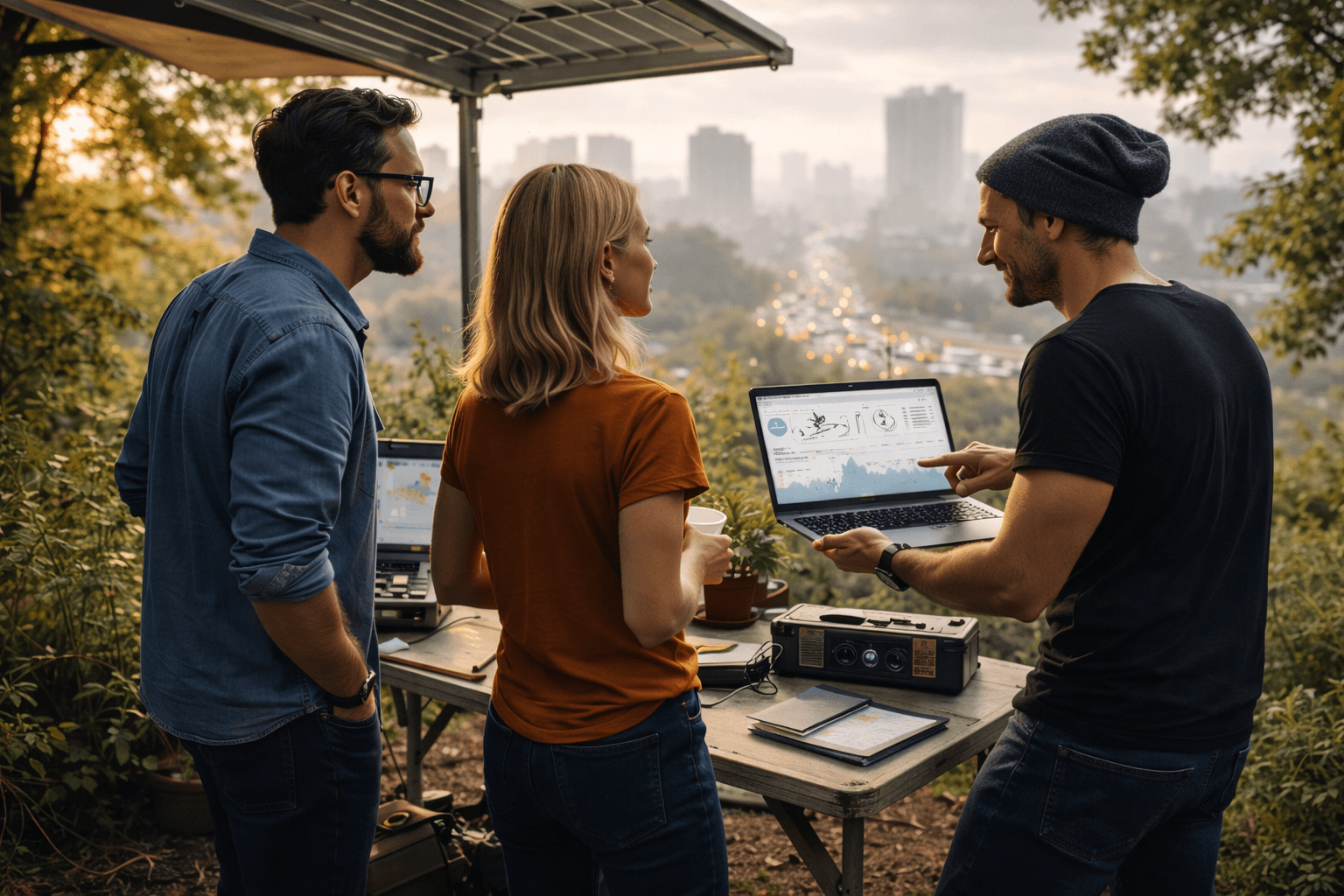
In practice, resilience comes down to things like:
Cloud infrastructure and engineering are part of our craft, and one of the ways we make resilience real. But the purpose is bigger than IT. Technology just happens to be one of the best places to practice resilience, because it doesn't let you fool yourself. You find out what breaks, why it breaks, and what it takes to build something that holds.
Our mission is to help people and organizations anticipate disruption, absorb impact, and turn challenges into opportunities for sustainable progress, so that resilience becomes a foundation of everyday life rather than a reaction to crisis.
We'd like to hear from you.
A question, an idea for working together, or a project you want to talk through? Send us an email:
Email: info@solcus.com